Why plants are important
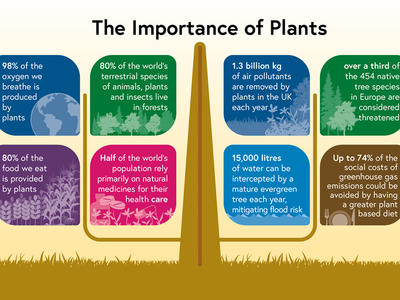
Did you know that plants produce 98% of the oxygen we breathe and 80% of the food we eat? Find out more about why are our plants so important.
It is a collaborative effort by over 30 organisations across the UK who are committed to protect the health of our nation’s plants and trees. This year we are celebrating the importance of being a good plant health citizen. Over the last 10 years we have undertaken a range of activities to support this work, which includes education, training, and citizen science work. With an emphasis on working together, the participants can reach a larger audience and more effectively communicate and amplify vital messages surrounding plant health. The week also incorporates the United Nations International Day of Plant Health
• Look out for signs of pests and diseases on your local trees- report these through TreeAlert. This information supports important tree health monitoring and surveillance work, contributes to ongoing scientific research, and helps to protect the nation's trees
• ‘Don’t risk it!’ Don’t bring plant material (plants, trees, fruit and seeds) into the UK from trips abroad. These might be carrying harmful pests and diseases
• Buy your plants and trees responsibly from reputable nurseries and suppliers. If you are buying plants online, buy from a UK-based supplier where possible, to reduce the risk of harmful pests and diseases entering the country. Check out the YouTube Video: ‘Buying Responsibly with Pippa Greenwood’
• Keep it clean by cleaning boots, bikes and buggies before visiting woodlands and parks, otherwise you could spread harmful organisms like fungi, bacteria and insects.
• If you are a supplier or trader, look into becoming Plant Healthy Certified. You will be helping to protect our plants, landscape and wildlife.
In the UK we will be using this exciting opportunity to show how we can all help to keep plants healthy and contribute towards being the first generation to leave the environment in a better state than we found it.
Tuesday 12th May 12pm - 1pm BST: Learn more about grey squirrel bark stripping, why certain trees attract more damage & the importance of monitoring
Register here for the webinar: Webinar Registration - Zoom
We need you! Be a good plant health citizen and help report on the health of our sweet chestnut trees
Relaunching in spring 2026 and continuing over the summer, we’re conducting a national check-up on the health of our sweet chestnut trees. We need as many people as possible to help out and report their findings through Forest Research’s TreeAlert system – the official online tool for reporting tree health of concern in Britain. The call to action follows findings of sweet chestnut blight, a disease which is usually fatal to sweet chestnut.
For more information on how to get involved: Check a sweet chestnut | RHS / RHS
For more ways to get involved:
RHS Garden Wisley : What's on RHS
What’s on in RHS Science & Collections / RHS
National Hedgerow Week takes place the week before National Plant Health Week, running from 4th-10th May 2026. National Hedgerow Week is coordinated by The Tree Council. Hedgerows need our help... they are the often-unsung heroes of the British countryside, yet they form the UK’s largest wildlife habitat, are a major part of our landscape and cultural heritage, and are crucial to halting biodiversity decline and tackling climate change. Check out their website for for free Hedge Talks, resources, and Life on the Hedge podcast episodes.
Free Online Hedge Talks:
The Craft of Hedgelaying with Nigel Adams - Tuesday 5 May 1pm – 2pm
Join full-time hedgelayer and long time Hedgelink member, Nigel Adams for a deep dive into the world of hedgelaying, with particular attention to its diverse regional styles.
Book your free ticket! – National Hedgerow Week 2026: The Craft of Hedgelaying with Nigel Adams – Zoom
The Future of Plant Health Science Webinar | Wednesday 13 May | 13:00-14:00
Plant health science sits at the intersection of science, policy, and global resilience, and it’s evolving rapidly in response to emerging risks and new technological capabilities.
This webinar brings together a panel of industry experts to provide practical insight and perspectives.
Through a series of short, focused talks, the session will cover key topics including biosecurity and surveillance, the changing policy landscape, and innovations in diagnostics and detection. Speakers will also highlight the critical gaps and opportunities shaping the future of the field.
Speakers:
Register here
Digital viticulture: The future of vine health
Wednesday 6 May | 15:00-16:00 | Online
The Royal Society of Biology (RSB) would like to invite you to an upcoming event as part of its Plant Health Series. Join Dr Katie Gold from Cornell University and Rob Poyser from Vinescapes, who will discuss the future of vine health and disease control, as well as Dr Gold's Grape Sensing, Pathology and Extension Lab at Cornell (GrapeSPEC). This will be followed by an opportunity for an audience Q&A and discussion.
Free to attend and open to all. Bookings close at 23:59 on Tuesday 5 May. Register here
Have you observed signs of Fuchsia Gall Mite in your garden? Submit the sighting and help gardeners track its movement and respond effectiviely.
The Fuchsia Gall Mite Monitoring Project collects public reports to track the spread of Fuchsia Gall Mite across the UK, using an interactive map and structured data to monitor its impact on gardens. Led by Kristopher Harper‑Allison of Harper & Debbage, the project works with the British Fuchsia Society and others to raise national awareness and improve understanding of this pest. Check out the latest distrubution map.
For more info click here
Forest Research Blog on Canker Stain of Plane, and it’s introduction in ammo cases in the second world war
Forest Research Blog on Plane Lace Bug: A Delicate Micro Menace Concealed in the City
iNaturalistUK blog for Natioanal Plant Health Week